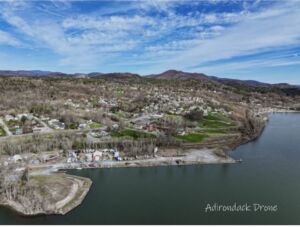
There is more to the Town of Moriah than the Village of Port Henry: distinct hamlets and “neighborhoods”, each with their own character and history. Read about the hamlets of Mineville, Witherbee, Moriah Corners, Moriah Center, Grover Hills, and the neighborhoods of Cheever, Tracy Road, Fisher Hill, Crowfoot Pond, Edgemont, and Mutton Hollow. And read about a few of the famous residents from these areas.
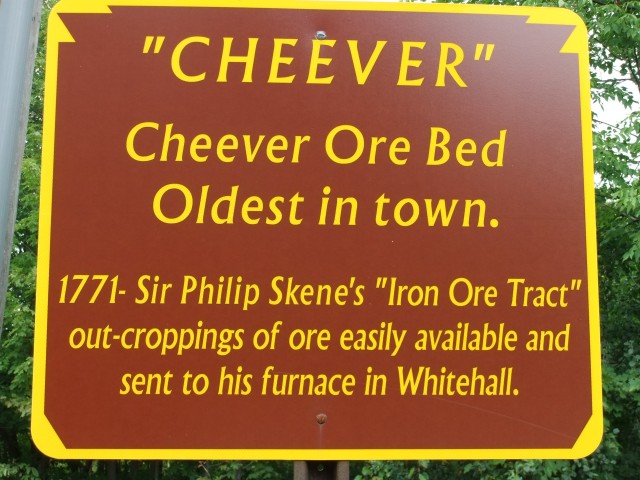
Cheever
The oldest iron bed in Moriah is the Cheever bed, located just one and one-half miles north of Port Henry. In its earliest days, settlers would go to the mine, pile the iron on to a sled and drag it back to town. The Cheever Bed’s value was not appreciated until 1853 when it began to be worked seriously. A number of other small beds in that area also were worked for several years.
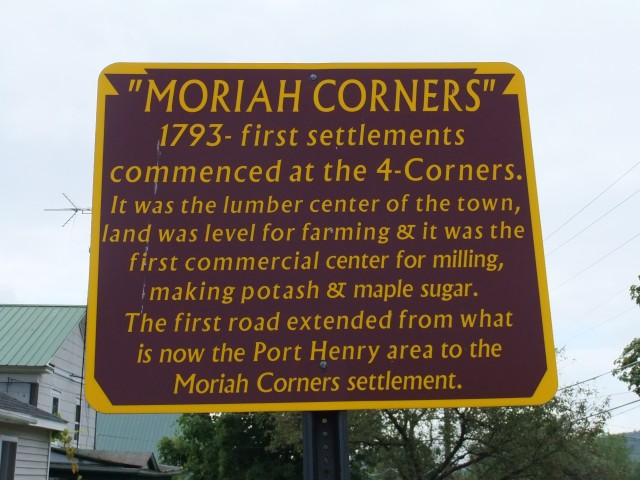
Moriah Corners
In the the late 1700s and early 1800s, timber harvesting and land clearing occurred at a great rate; there were 20 sawmills on the river between Ensign Pond and Lake Champlain in the first half of the 19th century. Docks were built at Port Henry as early as 1820, with the area’s first road linking Port Henry to Moriah Corners. Lumber harvested in the Moriah Corners area could then be rafted north to Canada, and, when the Champlain Canal opened, to southerly markets.
Mineville
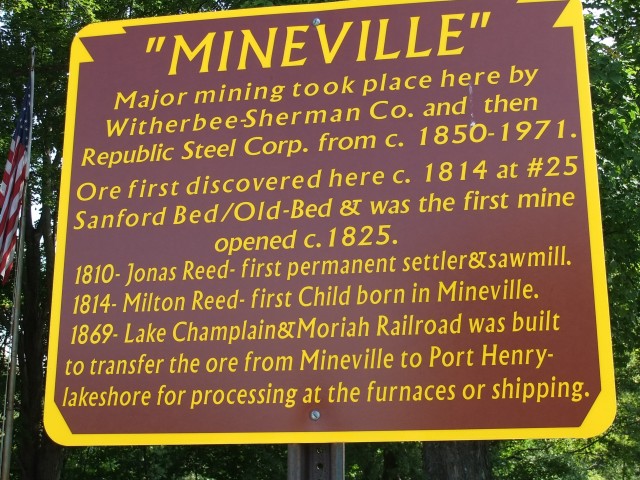
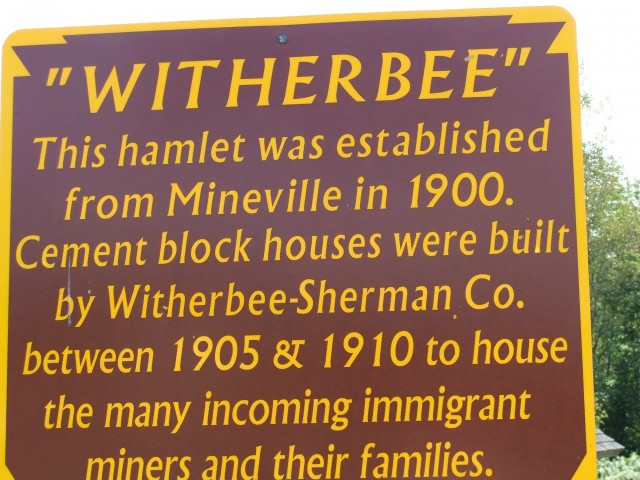
Large mining operations, that later became Republic Steel, were centered in Mineville and Witherbee from 1850 to 1971. Mineville and Witherbee were company towns, with Witherbee being separated from Mineville in 1900. Between 1905 and 1910, company houses were constructed from iron ore tailings; many of these houses still exist today.
Commercial buildings, such as the Rexall Drug Store in Mineville, were also constructed from the mine tailings bricks.
Along with the mining companies came the railroad for bringing ore from Mineville and Witherbee to the main line at Port Henry, replacing the old Plank Road.
Whitherbee
After a 1900 Corporate reorganization, the western part of the Mineville mining area was separated and named “Witherbee” in honor of the Moriah region’s foremost mining family.
By the late 19th and early 20th centuries, the area yielded massive amounts of high-grade iron ore, feeding national steel monopolies.
The company actively recruited farmers from Europe, housing them by nationality in distinct, planned neighborhoods.
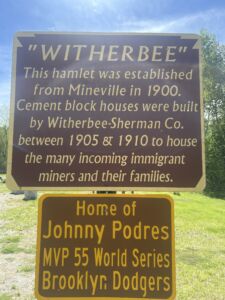
Today, Witherbee functions as a quiet residential hamlet with a population of just under 400 residents. It is well-known locally as the birthplace of legendary Major League Baseball Pitcher Johnny Podres. You will find the towns youth fishing pond Roe Pond which is annually stocked with thousands of rainbow trout, you will also find McConley Spring, a 100% natural spring with the best Adirondack water you can drink! Don’t forget to visit the Miner’s Park and ice mine where you can drive by on a hot summer day for free natural air conditioning!
If you are up for a quick hike with spectacular views visit Witherbee’s Belfry Mountain, a quick 10 minute hike will provide you with views of the entire Town of Moriah.
Moriah Center
Moriah Center, nestled in the Adirondack foothills of New York’s Essex County, originated in the late 18th century as a quiet agricultural and trading gateway located west of Port Henry. Its history is defined by early lumbering, a massive iron mining boom, and its evolving role within the broader Town of Moriah.
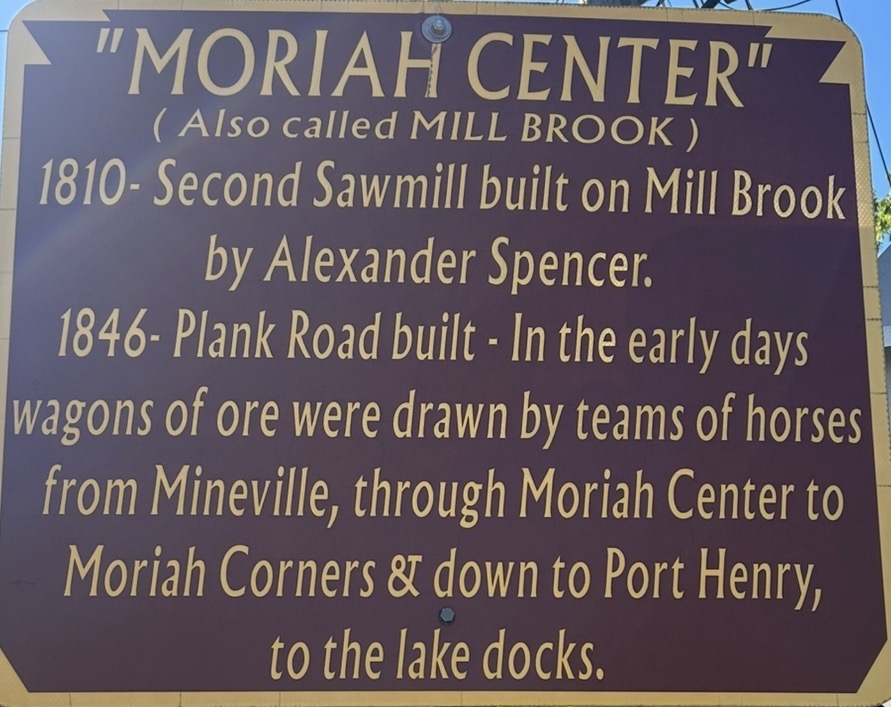
Mill Brook, flowing through the hamlet, provided the water power necessary to sustain early grist and lumber mills. By 1833, the Town boasted 36 sawmills. Moriah Center served as a peaceful, geographically central strip connecting the farming and commercial trades at Moriah Corners to the hillier, rugged western sections of the Town.
Today you will find local businesses such as the Old Miners Tavern, the Eagle Club, Boyea’s Grocery and Deli, Avery Energy and Itchy’s Repair Shop.
Port Henry
Port Henry, NY is a former Village on Lake Champlain known as the “San Francisco of the Adirondacks”. Originally settled in 1785 as Lewis Mills it was renamed in 1824 and became an incorporated Village in 1869. It became a massive 19th Century boomtown fueled by the rich iron ore mines of the surrounding Moriah region.
Port Henry served as the industrial processing hub and shipping port. Companies like Witherbee, Sherman & Company and later Republic Steel, operated mines that were crucial to American industry. Mining operations eventually ceased in 1971.
Effective March 31, 2017, the Village of Port Henry officially dissolved itself via a public referendum to save on municipal costs. Today, it functions as a hamlet absorbed into the larger Town of Moriah.
Port Henry today has switched gears from a mining industry to a more tourism area. The Town owns and operates two municipal campgrounds on beautiful Lake Champlain. While in Port Henry, you will find many different businesses along the downtown corridor.